
The status quo analysis involves defining and describing the municipality and its district heating system, including existing heat generation, networks, storage assets, their operational structure, and estimated lifetimes. It also assesses customer and tariff structures, energy prices, subsidy regimes, and ongoing or planned projects, highlighting unresolved issues and future challenges. For complex systems, large networks may be divided into manageable subnetworks based on technical criteria such as pressure levels or hydraulic decoupling.
- Status quo analysis of the current DHC system
- Including boundary conditions (municipality)
- Existing heat generation, networks and storage including estimated lifetimes
- operation and merit-order
- Existing customers and tariff structure
- Current and future energy prices and subsidy regime
- Collection of planned projects, unsolved issues and upcoming challenges
Useful links
| Tool | Link | Description | Category (main focus) | Picture |
| QM Toolbox | https://programme2014-20.interreg-central.eu/Content.Node/ENTRAIN.html | Several documents on the quality management (QM) of biomass district heating systems are available. These tools support the more efficient realisation and operation of district heating systems with a variety of renewable energy sources. Among other things, the QM system also provides useful guidance on conducting a thorough status quo analysis. | planning | 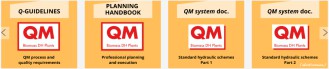 |